Image Change Around the Edges of the Procession Escort Reims
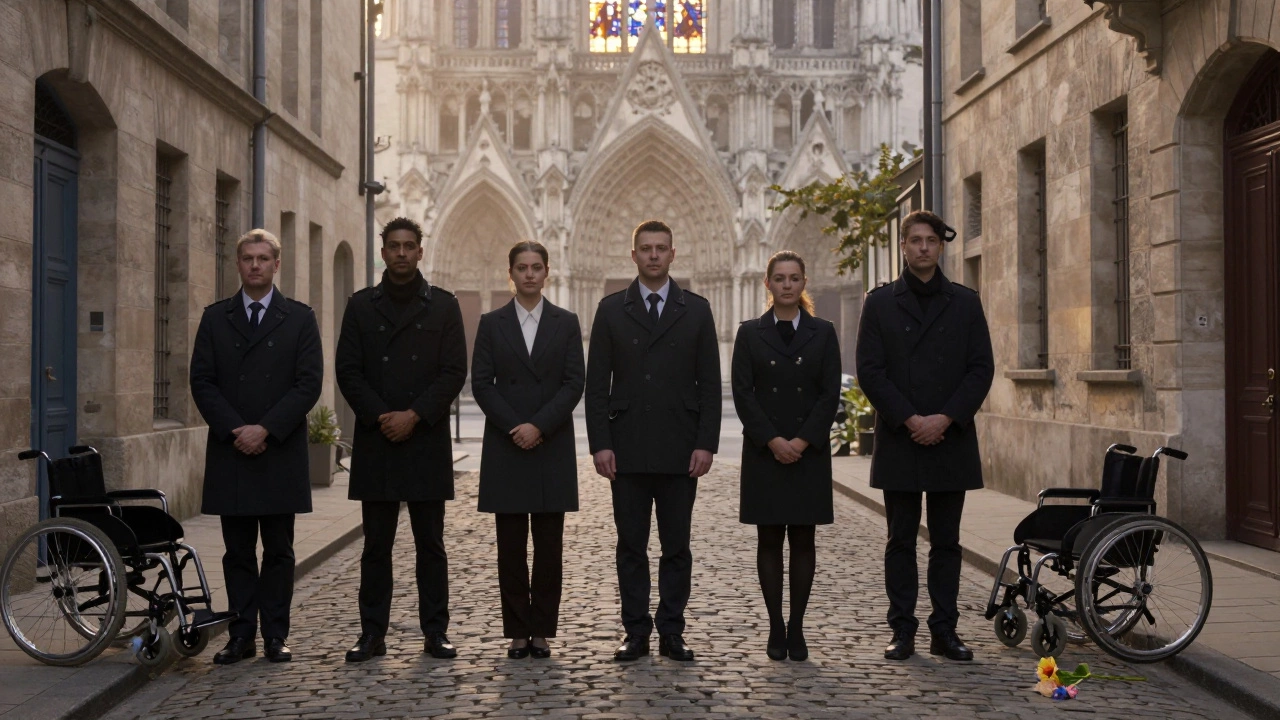
The procession through Reims in early autumn carries a quiet weight. It’s not just about the cathedral, the stained glass, or the champagne cellars. It’s about the edges - the frayed corners where history meets modern movement. People line the cobblestones, cameras raised, but the real story isn’t in the center. It’s in the transition zones: where the clergy steps off the pavement, where the flags dip just before the archway, where the escort moves in sync but never quite in frame. And somewhere, in a quiet corner of the city, someone is searching for escort parís - not because they’re lost, but because they’re curious about the unseen rhythms of French ritual, the hidden threads that tie ceremony to human presence.
Reims has seen processions for over a thousand years. Roman legions marched here. Kings were crowned under its vaults. The Great War left scars no parade can fully hide. But today’s escort - the group that walks ahead of the main ceremonial line - is a subtle thing. No trumpets. No drums. Just steady steps, coordinated turns, and a quiet awareness of space. They don’t carry banners. They don’t shout. They exist to create buffer, to guide flow, to let the sacred moment breathe. Their job isn’t to be seen. It’s to make sure everything else is seen properly.
What the Edges Really Show
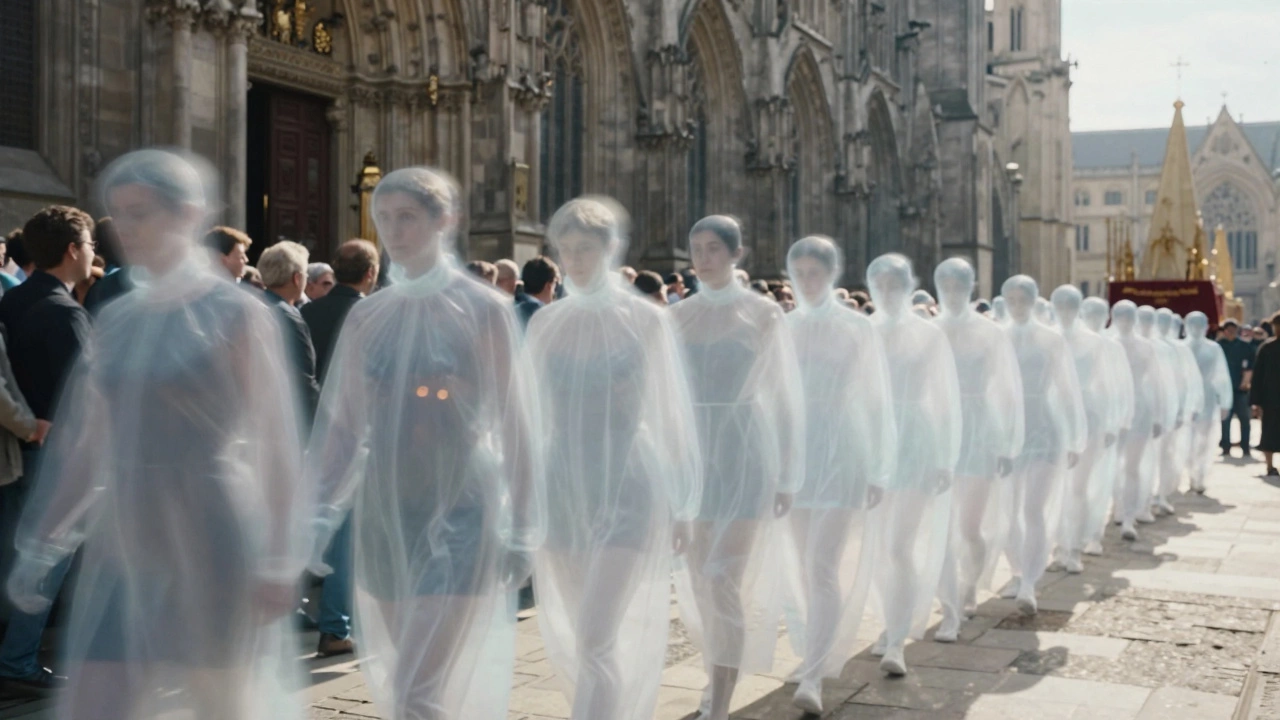
If you zoom in on any photo taken during the Reims procession, you’ll notice something odd. The people in the foreground are sharp. The cathedral is crisp. But the escort? Often blurred. Not because of motion. Because they’re not the focus. That’s the point. Their movement is designed to be imperceptible. They adjust their pace based on the weather, the crowd density, the angle of sunlight on the stone. One wrong step, and the entire rhythm breaks. The choir might stumble. The children carrying flowers might get pushed. The mayor’s car might not get the clear path it needs.
There’s no official manual for this. No training academy. The escort is made up of retired military, local volunteers, and sometimes even students from the University of Reims who sign up for the experience. They learn by watching. By standing still for hours. By memorizing the rhythm of the bells that signal each turn. The oldest member, a man named Henri Lefevre, has been doing it since 1978. He says the key isn’t strength - it’s silence. "You don’t lead," he told me last spring. "You just hold the space. Like a door that doesn’t creak."
Why the Image Changes Around Them
Photographers know this. The best shots of the Reims procession aren’t taken from the front. They’re taken from the side, from the alleyways, from the upper windows of old bookshops. That’s where you catch the real change - the moment the escort shifts their weight just slightly to let a wheelchair pass. The way their shoulders drop when the music pauses. The way their eyes flicker to the sky, not because they’re looking for clouds, but because they’re checking if the rain will start before the final hymn.
Every year, the city releases a photo archive. Last year, a student from Lyon noticed something strange. In 37 out of 42 images taken at the same point - the intersection near Rue de la République - the escort was always one step ahead of the main group. But in two of them, they were exactly even. And in one, they were half a step behind. That one image went viral. People called it "the glitch." But it wasn’t a glitch. It was a response. The escort had sensed the crowd leaning too far forward. They slowed. To protect. To preserve.
The Hidden Rules of the Escort
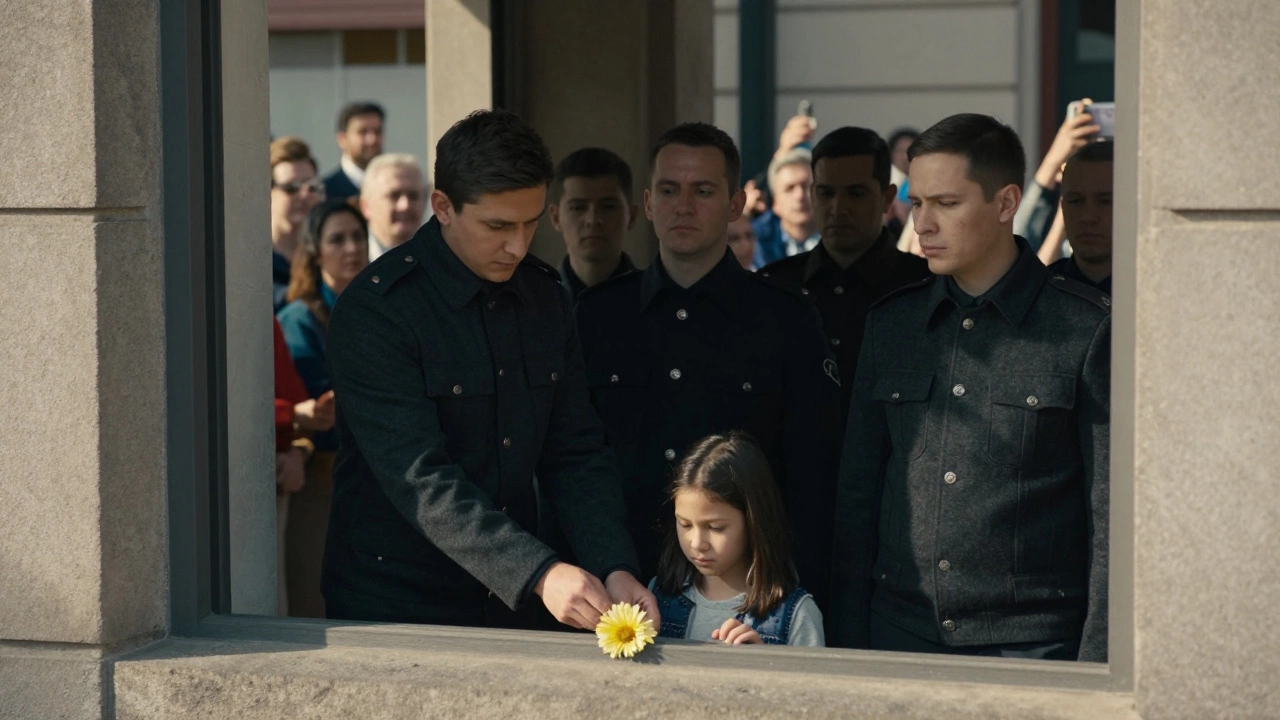
There are no written rules, but there are unwritten ones. You never walk directly in front of the bishop. You never look at the cameras. You never smile unless the children do. You never stop unless the music stops. And you never, ever let your shadow cross the path of the relic cart. That’s the one rule no one talks about. It’s not superstition. It’s physics. The relic cart is made of brass and weighs over 200 kilos. If the shadow falls on it, the heat from the sun hitting the metal changes. The metal expands. And if it expands too fast, the wheels can bind. A hundred years ago, that’s exactly what happened. The cart jammed. The procession halted for 27 minutes. No one was hurt. But the escort never forgot.
Today, they wear dark wool uniforms - not for tradition, but because wool doesn’t reflect light. They carry no tools. No radios. No phones. Their only equipment is their memory and their breath. They breathe in four counts. Out six. It keeps them calm. It keeps them synchronized. And it’s why, even when the crowd cheers, they don’t turn. They don’t react. They just keep moving.
What Happens When the Escort Falters
There was one year - 2019 - when it happened. A young woman in the escort, new to the role, misread a signal. She turned too early. The line broke. For three seconds, the procession stalled. The choir missed their cue. A child dropped a flower. No one screamed. No one yelled. The escort just stopped. All of them. Together. Not because they were told to. Because they felt it. The silence stretched. Then, slowly, the woman stepped back into place. The line reformed. The music resumed. No one ever spoke about it again. But every escort member that year wore a small silver pin - a tiny bell, silent. A reminder.
That’s the thing about Reims. The grandeur is obvious. The history is documented. But the real heartbeat? It’s in the quiet adjustments. The unspoken corrections. The way the escort moves like a living fence - not to keep people out, but to keep the moment intact.
And sometimes, when the sun hits just right, you can see it - the image change around the edges. Not in color. Not in shape. But in stillness. The escort doesn’t move to be noticed. They move so that everything else can be felt.
That’s why, if you’re ever in Reims during the procession, don’t just look at the cathedral. Don’t just chase the big shots. Stand to the side. Wait. Watch the edges. You might not see anything dramatic. But if you’re patient, you’ll see something deeper. Something human. Something that doesn’t need a caption. Something that doesn’t need to go viral. Something that just… is.
There’s a quiet corner of the internet where people upload raw footage from the sidelines. One clip, taken from a balcony above Rue du Bailli, shows the escort walking past a café. A woman inside, sipping coffee, glances up. She doesn’t wave. Doesn’t smile. Just nods. And the lead escort, a man in his late 60s, gives the faintest tilt of his head in return. That’s it. No words. No fanfare. Just recognition. That moment, 12 seconds long, has been viewed over 2 million times. No one knows why. But everyone who’s watched it says the same thing: "It felt like they were saying thank you."
Some people search for escort paris because they think it’s about glamour. About attention. About being seen. But the escort in Reims teaches something else. It’s about presence. About holding space. About being the quiet thread that keeps the whole thing from unraveling. And if you’re ever in Paris, and you see someone walking with that same stillness - not rushing, not posing - you might just be looking at the same kind of soul.
There’s a myth that the escort in Reims is chosen by lottery. It’s not true. They’re chosen by silence. By how well they listen. By how little they need to say. And if you’ve ever stood too close to a moment you didn’t want to ruin - you already know what that feels like.
Some say the best processions aren’t the ones with the most gold. But the ones where the people on the edges never make a sound. And somewhere, in a small apartment in Montmartre, a woman named Léa is preparing for her first escort shift next spring. She doesn’t know it yet, but she’s already learning. She’s been watching those 12-second videos. She’s been practicing her breathing. And she’s already started to notice - the way light changes when someone is truly there, without needing to be seen.
And if you ever find yourself walking near the edge of something sacred - don’t push forward. Don’t reach for the camera. Just stand still. Let the space hold you. That’s the real image change. Not in the frame. But in you.